If you’re like most drivers, you probably don’t think about how much oil your car needs until it starts to sputter or make a weird noise. But according to the experts, your vehicle needs an average of 3.8 liters (1 gallon) of oil per thousand miles traveled. That means if your car is averaging 25,000 miles per year, it will need about 120 ounces of oil – enough for about three months of driving.
The amount of oil your car needs will vary depending on the make and model of your car, your driving habits, and the weather. The National Automobile Dealers Association (NADA) recommends checking your car’s lubrication level every 3 months and adding additional oil if necessary.
Here are a few tips to help you estimate your car’s engine oil consumption:
- Check the manufacturer’s recommendations. The maker usually specifies how many quarts you should use and indicates when to check it.
- Use an oil change schedule that you followed in the past.
- Keep a log of your oil consumption, including mileage and months of the year.
- Check the oil level if you’re not using synthetic oil.
- Look for black smoke or a burning smell coming from the exhaust system.
- Park in a shady spot and check for leakage under the vehicle with a flashlight.
How do I know how much oil my car needs?
The best way to check how much oil your car needs is to consult your car’s company manual. The manual will give you the recommended oil type and weight as well as the oil capacity for your vehicle.
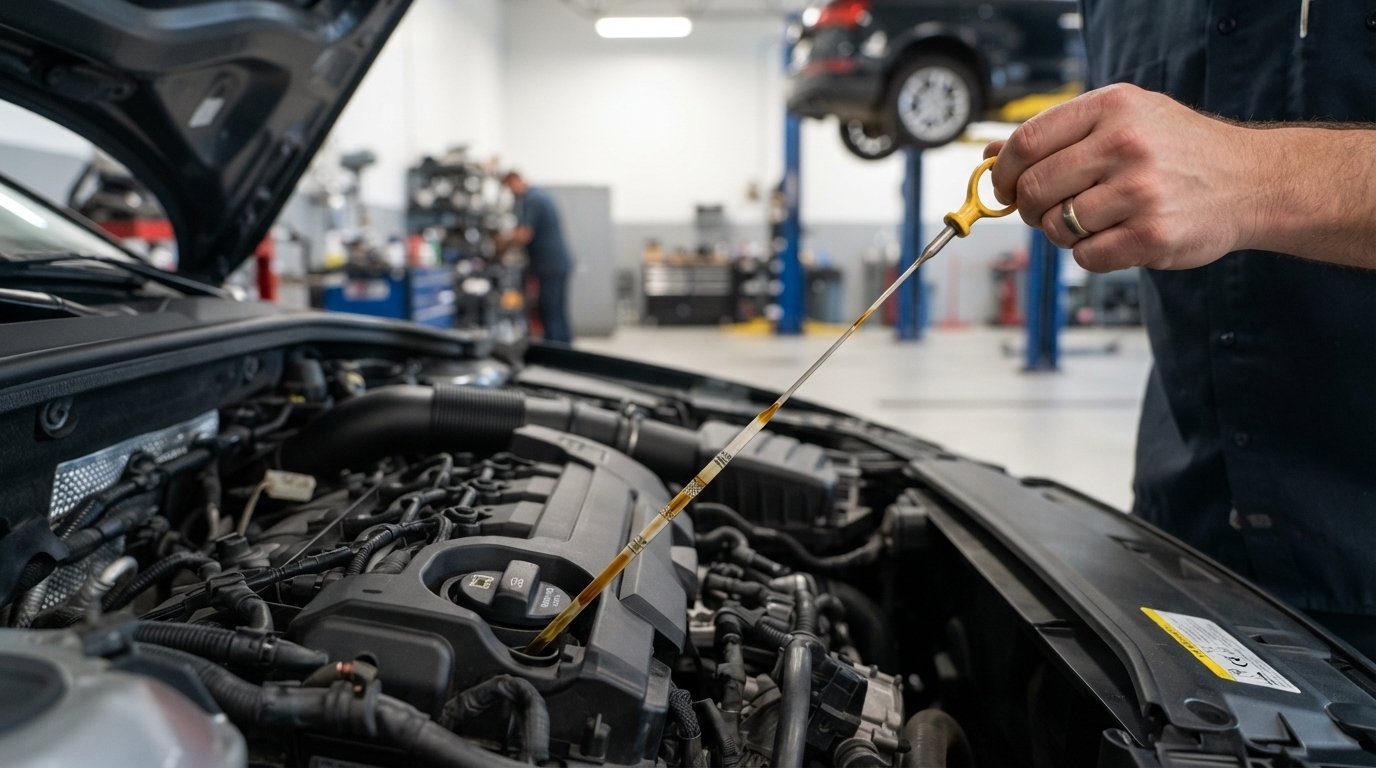
To check the engine oil level in a car, locate the oil dipstick. The dipstick is usually a long, thin metal rod with a rubber or plastic handle. Wipe the dipstick clean with a cloth, then insert it all the way into the engine oil reservoir. Remove the dipstick and check the level of oil on the stick. The oil should be between the two marks on the stick. If the level is low, add the appropriate amount of oil to bring it up to the recommended mark.
How engine size affects the amount of oil used?
The smaller the engine, the less oil it takes to fill the crankcase. This is because there is less reciprocating mass in a small engine and less opportunity for the air/oil mixture to leak past the piston rings. A small engine also has a shorter stroke, meaning that there is less distance the piston travels up and down in the cylinder. This reduces the amount of time that oil is exposed to high temperatures and combustion pressures.
How many quarts of oil does a car engine require? This question is difficult to answer without knowing the specifics of the engine. However, there are general guidelines that can be followed for different types of engines.
- Most 4-cylinder engines require around 5 quarts of oil.
- Most 6-cylinder engines require between 6 and 8 quarts.
- 8-cylinder engines generally require around 8-10 quarts of oil.
It is important to consult the maker’s manual for the specific requirements of the car engine.
Symptoms that an engine needs an oil change
An engine needs an oil change when the oil becomes dirty and less effective at lubricating the engine components. The dirtier the oil, the more wear, and tear on the engine. Over time, this can lead to decreased performance and even engine failure.
Several symptoms can indicate an engine needs an oil change.
- One is a decrease in gas mileage. If you’re noticing that you have to fill up your tank more often than usual, it could be because your car is working harder to compensate for the lack of lubrication caused by dirty oil.
- Other signs include black smoke coming from the exhaust pipe, knocking or pinging noises coming from the engine, and a loss of power.
If you’re experiencing any of these symptoms, it’s time for an oil change.
When should you schedule the oil change?
Here are some general guidelines:
- For gasoline engines: Your car will need an oil change every 3,000 miles or 3 months, whichever comes first.
- For diesel engines: Your car will need an oil change every 5,000 miles or 5 months, whichever comes first.
- For hybrid vehicles: Your car will need an oil change every 7500 miles or 7 months, whichever comes first.
Crucially, the answer to your question depends entirely on your specific vehicle. The information below is a general guide to help you understand how much oil you might need. To get the exact number, you must check your vehicle’s owner’s manual.
To determine “how much oil” your car needs, we have to talk about two different types of “need”:
- Top-Off Amount: How much oil the engine consumes as you drive between oil changes.
- Oil Change Capacity: How much total oil is required to completely fill the engine during a full service.
1. The Top-Off Amount: How Much Oil Your Car Consumes for Average Miles
Internal combustion engines naturally burn a small amount of oil while they are running. This is considered normal operation, not necessarily a leak or a problem.
For an average car driving “average” miles (about 12,000 to 15,000 miles per year), you can generally expect to top off a modest amount between services.
Normal Oil Consumption Range
Most healthy, modern passenger cars will consume somewhere between 1 to 2 quarts (or liters) of oil every 10,000 to 15,000 miles.
This means that if you check your oil every month (which is recommended), you might need to add about half a quart or a full quart once or twice between your scheduled oil changes.
Factors that Increase Oil Consumption
Your car will need more oil than this “average” amount if:
- The engine is old: Vehicles with over 100,000 miles tend to have more internal wear, allowing more oil to seep past internal components and burn. For high-mileage cars, adding 1 quart every 1,000 to 2,000 miles can sometimes still be considered “normal,” though it should be monitored closely by a mechanic.
- The engine is turbocharged: Turbochargers are lubricated by engine oil and operate under high heat and pressure, often causing them to consume more oil than non-turbo engines.
- You engage in “severe” driving: This includes frequent short trips, driving in extreme heat or cold, prolonged idling, towing a trailer, or aggressive driving with high RPMs. Severe conditions can cause engine oil to break down and be consumed faster.
- There is a mechanical issue: Excessive oil consumption (e.g., needing 1 quart every few hundred miles) is a sign of a problem, such as worn piston rings, valve seals, or a physical oil leak. If you see blue or grey smoke from your exhaust, your engine is burning an excessive amount of oil.
2. The Oil Change Capacity: How Much Total Oil Your Car Needs for a Full Fill
When you get a standard oil change, the mechanic drains all the old oil and replaces it. The amount needed depends almost entirely on the size and design of your engine. Larger, more powerful engines require more oil to lubricate their many moving parts.
Here are general estimates of how much oil different engine sizes typically require:
- Small (4-Cylinder) Engines: These compact, fuel-efficient engines are found in many sedans, hatchbacks, and small SUVs. They typically require 3.5 to 5 quarts (3.3 to 4.7 liters) of oil.
- Medium (6-Cylinder/V6) Engines: Found in mid-sized sedans, trucks, and family SUVs, these require more oil for their larger block. They typically take 5 to 6 quarts (4.7 to 5.7 liters) of oil.
- Large (8-Cylinder/V8) Engines: Common in large luxury sedans, muscle cars, and large pickup trucks, these are the most demanding. They generally require 7 to 9 quarts (6.6 to 8.5 liters) of oil, or sometimes even more.
These are generalities. For example, some small engines have a larger oil capacity for increased durability, while some modern high-performance engines use sophisticated designs to operate on surprisingly little oil.
Summary Checklist: How to Know the Right Amount of Oil for Your Car
To avoid guesswork and protect your engine, follow these steps to find the precise amount of oil your vehicle needs:
- Check Your Owner’s Manual: This is your definitive source. Look in the index under “Engine Oil,” “Capacities,” or “Maintenance” to find the exact oil change capacity and the specified oil type/viscosity (e.g., 5W-30).
- Check Your Vehicle on a Dealership or Repair Shop Website: Many service centers provide maintenance guides that allow you to search for your car by year, make, and model to find the standard service requirements.
- Use an Online Oil Capacity Lookup Tool: Many reputable auto parts stores and motor oil manufacturers (like Castrol, Mobil 1, etc.) have free tools on their websites where you enter your vehicle information to get a complete maintenance guide.
- Check the Dipstick: This is the most reliable way to know how much oil is currently in your engine.
- Find a level surface and turn off your engine (ideally when it’s warm).
- Pull out the dipstick, wipe it clean, re-insert it fully, and pull it out again.
- The oil level should be between the “Add” (or low) and “Full” (or high) marks.
- NEVER OVERFILL YOUR ENGINE. Overfilling can be just as damaging as underfilling. If the oil is below the “Add” line, add oil only about half a quart at a time and re-check with the dipstick.
Frequently Asked Questions
What Happens if Your Car Runs Out of Oil?
If your car runs out of oil, the consequences can be severe. The engine will overheat and may be permanently damaged. You may also have to replace the entire engine.
What Happens When You Put Too Much Oil in Your Car?
The excess oil will not be able to lubricate the engine, which can cause damage properly. The oil will also start to accumulate on the surfaces of the engine, which can lead to sludge formation and decreased engine performance.
Does the engine make noise when oil is low?
Engine noise is not typically associated with low oil levels; however, if the engine is running low on oil, the lack of lubrication can cause damage to the engine and lead to increased noise levels. In some cases, a low oil level may cause the engine to seize, which will produce a very loud noise. It is important to check your oil level regularly and ensure that you have enough oil in your vehicle to avoid any unnecessary damage.
Why is my car losing oil but no leak?
One possible explanation for why your car may be losing oil even though there is no visible leak is that the seals in the engine are deteriorating, causing oil to leak out. However, because there is no external evidence of a leak, the oil must be leaking out internally and being burned off as part of the combustion process. This could be due to a number of factors, such as age or wear and tear on the engine.